
Applied Sport Sciences
Pacing Strategies in Winter Olympic Endurance Sports
04.02.2026, 16:00 CET
Across the Winter Olympic disciplines of speed skating, cross‑country skiing, biathlon and the newly added ski mountaineering, pacing is far more than simply distributing effort. It is a complex interplay of physiology, biomechanics, environmental constraints, tactical decision‑making and psychological regulation. The athletes who master this interplay are often the ones who stand on the podium.
In this webinar we will explore how pacing shapes final performance outcomes and how different sports impose distinct demands with examples from speed skating, cross‑country skiing, biathlon and ski mountaineering. Across all these sports, pacing is not just a performance variable – it is a competitive skill, a tactical weapon and a window into how elite athletes regulate effort under extreme conditions.
Chaired by

Prof Maria Francesca Piacentini
University of Rome “Foro Italico”, Rome, Italy
Chair of the ECSS Scientific Board
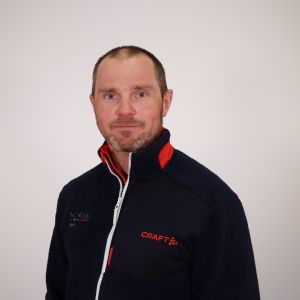
Prof Thomas Losnegard
Department of Physical Performance,
Norwegian School of Sport Sciences,
Oslo, Norway
Head of Endurance at the Norwegian Olympic Center
Speakers
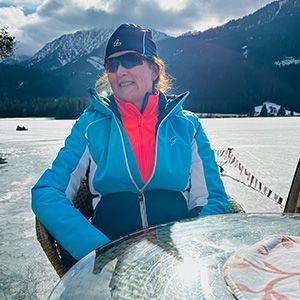 Prof Florentina J. Hettinga
Department of Human Movement Sciences,
Vrije Universiteit Amsterdam,
Amsterdam, Netherlands
"Science of Speed Skating: Long Track and Short Track"
As a high-volume gliding sport requiring about 900-1100 hours of training per year, speed skating is an intriguing sport requiring mixed-modal training. The crouched position and asymmetric motion required going through the corners impact on blood flow, fatigue and recovery processes, distinguishing it from many other sports. With substantial contributions of both anaerobic and aerobic energy resources and the unique and interesting sport-specific technical aspects of skating, pacing is an important performance determinant and is a skill that talented athletes learn throughout adolescence. In this session I will overview the unique characteristics of speed skating that make it such an interesting sport and how pacing and performance can be optimised, in youth athletes as well as in Olympians. With relatively new events such as the team pursuit on the Olympic agenda and short-track adding interesting critical tactical and pack-dynamic elements to the mix, new insights will be gained on pacing, tactics and performance in Olympic Winter Sports.
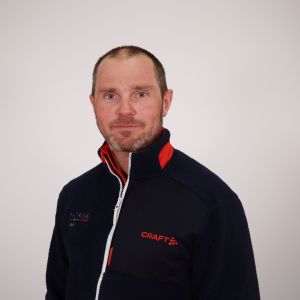 Prof Thomas Losnegard
Department of Physical Performance,
Norwegian School of Sport Sciences,
Oslo, Norway
Head of Endurance at the Norwegian Olympic Center
"Optimising Performance in Biathlon and Cross-Country Skiing by Adjusting Pacing Behaviour"
Cross-country skiing, biathlon and Nordic combined are Winter Olympics sports that involve cross-country skiing in undulating terrain, characterised by various subtechniques and repeated intensity fluctuations. The stochastic interval profile of these sports necessitates the continuous regulation of work and energy expenditure throughout training sessions and competitions, a concept known as pacing. With the advent of technological advancements that allow for the measurement of these features during training and competitions, scientific studies have broadened our understanding of the associated racing and pacing demands. In this presentation, I provide the current scientific overview of energy system contribution and pacing demands in elite cross-country skiing and biathlon and demonstrate how performance can be enhanced by adjusting pacing behaviour. While several objective tools such as heart rate, blood lactate concentration and speed measurements are widely used in practice, current understanding suggests that these measures should supplement, rather than replace, the use of perceived effort (e.g. rating of perceived exertion) to regulate intensity during training and competition in undulating terrain. Therefore, the ability to self-regulate effort appears to be an important performance characteristic and should be developed in adolescents and systematically used to optimise and evaluate the training process and race performance throughout athletes’ careers.
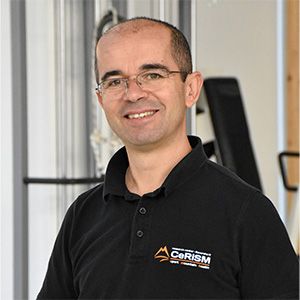 Prof Lorenzo Bortolan
Department of Psychology and Cognitive Science,
University of Trento,
Trento, Italy
Research Centre for Mountain Sport and Health
"Ski Mountaineering: A Look at the Discipline Shortly Before its Olympic Debut"
Ski mountaineering is a rapidly growing winter sport that involves traversing challenging terrain, steep uphill skiing and boot-packing, high-speed descents and rapid equipment changes in transition zones. Performance requires a combination of high aerobic fitness, technical skills and efficiency. The sport includes five official competition formats differing in distance, vertical gain and race structure, all contested at ISMF World Cup and World Championship events. Following its inclusion in the Milano–Cortina 2026 Winter Olympic Games, scientific interest in ski mountaineering has increased markedly. The talk will focus on the main determinants of performance and pacing strategies, with particular emphasis on the Olympic Sprint and Relay formats. Key factors include aerobic capacity, body–equipment mass and efficiency during uphill and transition phases. Recent studies show that uphill skiing and transitions account for most of the variance in performance, while downhill sections play a smaller role. Implications for performance analysis and training will be discussed.