
Scientific Programme
Psychology, Social Sciences & Humanities
IS-SH04 - FEPSAC-ECSS Invited Symposium: Designing Sport Environments for Wellbeing and Growth
Date: 08.07.2026, Time: 16:45 - 18:00, Session Room: 3BC (STCC)
Description
This invited symposium explores how sport can be used intentionally to promote socio-emotional development, wellbeing, and sustainable career pathways among vulnerable youth and young athletes. Drawing on multi-country qualitative and intervention data, the first presentation examines how adolescents in institutional care or low socioeconomic contexts experience sport as an emotionally charged space, and shows how mentoring by former elite athletes can reduce conduct problems while strengthening emotional skills, social support, and wellbeing. The second presentation introduces self-transcendence goals as a novel lens on motivation in adolescent and adult athletes, demonstrating that ethically led climates which emphasise contributing to others uniquely predict vitality and prosocial intentions beyond traditional mastery and performance goals. The third presentation focuses on young biathletes’ dual careers, detailing patterns of dual-career strain, emotional and academic challenges, and the design of digital educational tools that enhance self-management and emotional regulation. Together, the symposium offers an integrated perspective on how carefully designed sport environments and leadership can promote socio-emotional competence, prosocial behaviour, and long-term development in at-risk and performance-focused youth. It speaks to sport psychology experts and youth sport coaches.
Chair(s)

Rita F de Oliveira
London South Bank University; FEPSAC, School of Applied Sciences
United Kingdom

Vincent Gremeaux
UNIL, Lausanne Sports Science Institute
Switzerland
Speaker A
Rita F de Oliveira
London South Bank University; FEPSAC, School of Applied Sciences
United Kingdom
Read CVECSS Lausanne 2026: IS-SH04 [31158]
Sport as a Vehicle for Socio-Emotional Development in At-Risk Adolescents: Insights from Qualitative and Intervention Studies
Adolescents living in institutional care or in low socioeconomic contexts often experience disrupted family structures, limited support systems, and elevated behavioural and emotional difficulties[1]. Sports participation may offer a stable social environment and opportunities for socio-emotional development[2]. This project consisted of two complementary studies: Study 1 explored at-risk adolescents’ perceptions, knowledge, and behaviours related to socio-emotional skills in sport, while Study 2 evaluated the effectiveness of a socio-emotional mentoring program delivered by former elite athletes. Methods Study 1 involved 96 adolescents aged 12–17 years (66 females, 30 males) from care institutions in Italy, Portugal, the United Kingdom, and Türkiye. Fourteen focus groups (6–8 adolescents each) were conducted, and data were analysed using thematic analysis. Study 2 included 48 adolescents (21 females, 25 males; M_age = 14.81, SD = 1.33) from Portugal, Romania, Italy, Bulgaria, and Türkiye, of whom 34 were institutionalised and 14 came from low socioeconomic backgrounds. Pre- and post-intervention measures included conduct problems, wellbeing, emotional intelligence, and perceived social support. Wilcoxon signed-rank tests and Cohen’s r were used to assess change. Results Study 1 revealed four overarching themes: (1) emotional causes of behavioural problems, including frustration and unresolved past experiences; (2) emotional skills to regain control, such as self-regulation and communication strategies; (3) social support makes sports worthwhile, emphasising peers and coaches; and (4) sport as a socio-emotional resource, offering belonging, competence, and emotional expression. In Study 2, adolescents showed significant reductions in conduct problems (Z = –3.51, p < .001, r = .37) and significant increases in support from significant others (Z = –2.88, p = .004) and friends (Z = –2.37, p = .018). All emotional intelligence dimensions improved: emotion self-appraisal (p = .007), others’ emotion appraisal (p < .001), use of emotion (p < .001), and emotion regulation (p < .001). Wellbeing also increased (Z = –3.53, p < .001, r = –.36). Discussion Across both studies, sport emerged as an emotionally salient context that simultaneously challenges and supports at-risk adolescents. Study 1 showed that adolescents perceive sport as a key space for developing emotional and social resources, despite frequent emotional difficulties. Study 2 demonstrated that socio-emotional mentoring by former elite athletes further enhances emotional competence, social support, behavioural adjustment, and wellbeing. Together, these findings indicate that sport-based mentoring interventions offer a promising, scalable approach to promoting socio-emotional skills and positive developmental outcomes among vulnerable youth. [1] Cáceres, et al. 2021; [2] Badura et al, 2021
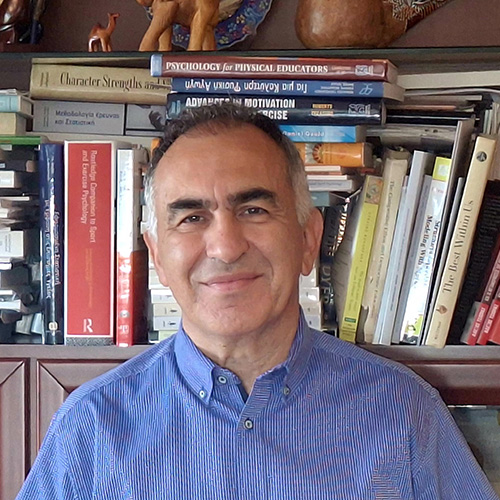
Speaker B
Athanasios Papaioannou
University of Thessaly, School of Physical Education & Sport Sciences
Greece
Read CVECSS Lausanne 2026: IS-SH04 [17053]
Why self-transcendence goals matter: enhancing athlete wellbeing and prosocial behaviour
This study examined two novel hypotheses: (1) Self-transcendence (ST) goals—but not mastery or performance goals—account for unique variance in vitality, prosocial emotions, and prosocial behavioural intentions; (2) Ethical leadership accounts for unique variance in ST goal priority. It was further hypothesized that these effects would be similar across adolescent and adult athletes. Method Participants were adolescent (aged 15.2 ± 1.4; N = 418) and adult (aged 23.6 ± 5.4; N = 498) football athletes (417 males, 492 females). They completed validated measures of ST, mastery, and performance goals; compassion for others; intentions for voluntarism and environmental behaviours; vitality; and ethical and transformational leadership. Results Measurement invariance analyses supported metric and scalar invariance of the goal measures across age groups. All scales demonstrated acceptable reliability and structural validity. Only ST goals accounted for unique variance in vitality, compassion, and intentions for voluntarism and environmental behaviors. Ethical leadership uniquely predicted ST goal priority, transformational leadership uniquely predicted mastery goal priority, and ethical leadership was negatively associated with performance goal priority. Adolescents showed weaker links with ST goal priorities and stronger links with mastery goal priority than adults. Females showed stronger associations with ST and mastery goal priorities and weaker links with performance goal priority than males. Discussion Findings suggest that to enhance athletes’ vitality and prosocial outcomes, coaches should primarily foster ST goals [1] through ethical leadership [2]. The results offer new insights for achievement goal theory and highlight the need for intervention studies to examine causal mechanisms. [1] Kitson, et al. 2020 [2] Burton et al., 2014

Speaker C
Małgorzata Maria Sławińska
Institute of Sport - National Research Institute , Social Sciences Department
Poland
Read CVECSS Lausanne 2026: IS-SH04 [41468]
Dual Career Pathways in Young Biathletes: Findings From the DC4B Project
The Dual Career for Young Biathletes (DC4B) project addresses the need for discipline-specific, evidence-informed support to help youth biathletes manage the combined demands of sport participation and education. Biathletes frequently travel for training camps and international competitions, leading to prolonged absences from school, reliance on independent study, and exposure to diverse cultural contexts [1]. DC4B aims to generate a comprehensive understanding of these demands and translate them into targeted digital educational resources for athletes. Methods Completed work includes a literature review, a multinational survey (N≈100), focus groups with athletes (N=40), and semi-structured interviews with coaches (N=9) were thematically analysed. Data were collected to examine dual-career strain, support mechanisms, emotional and social competencies, and contextual factors influencing academic and athletic balance. Results Quantitative findings indicate moderate to high Dual Career (DC) strain, primarily driven by time pressure, academic inflexibility, and cumulative physical and mental fatigue. Educational support was the only support domain correlated (p<.05) with reduced DC challenges, while higher emotional awareness and social adaptability correlated (p<.05) positively with confidence and perceived readiness. Qualitative analyses highlighted insufficiently coordinated school–sport structures, limited institutional understanding of biathlon-specific demands, and substantial emotional load associated with prolonged travel and independent study. Coaches reinforced these observations, noting that athletes frequently return from camps with significant academic backlog, must negotiate academic support individually, and often lack access to formalised DC mechanisms for endurance-based individual sports. Coaches also reported adjusting training plans to accommodate study demands, emphasised persistent financial constraints, and identified the need for structured psychological or mentoring support. Several linked chronic DC incompatibility with heightened dropout risk. Discussion These convergent findings guide the development of evidence-based digital educational modules and a mobile application aimed at enhancing self-management, planning, and emotional regulation. The final mobile platform is intended to strengthen DC preparedness and support sustainable developmental trajectories among young biathletes. [1] Stambulova et al (2024)